

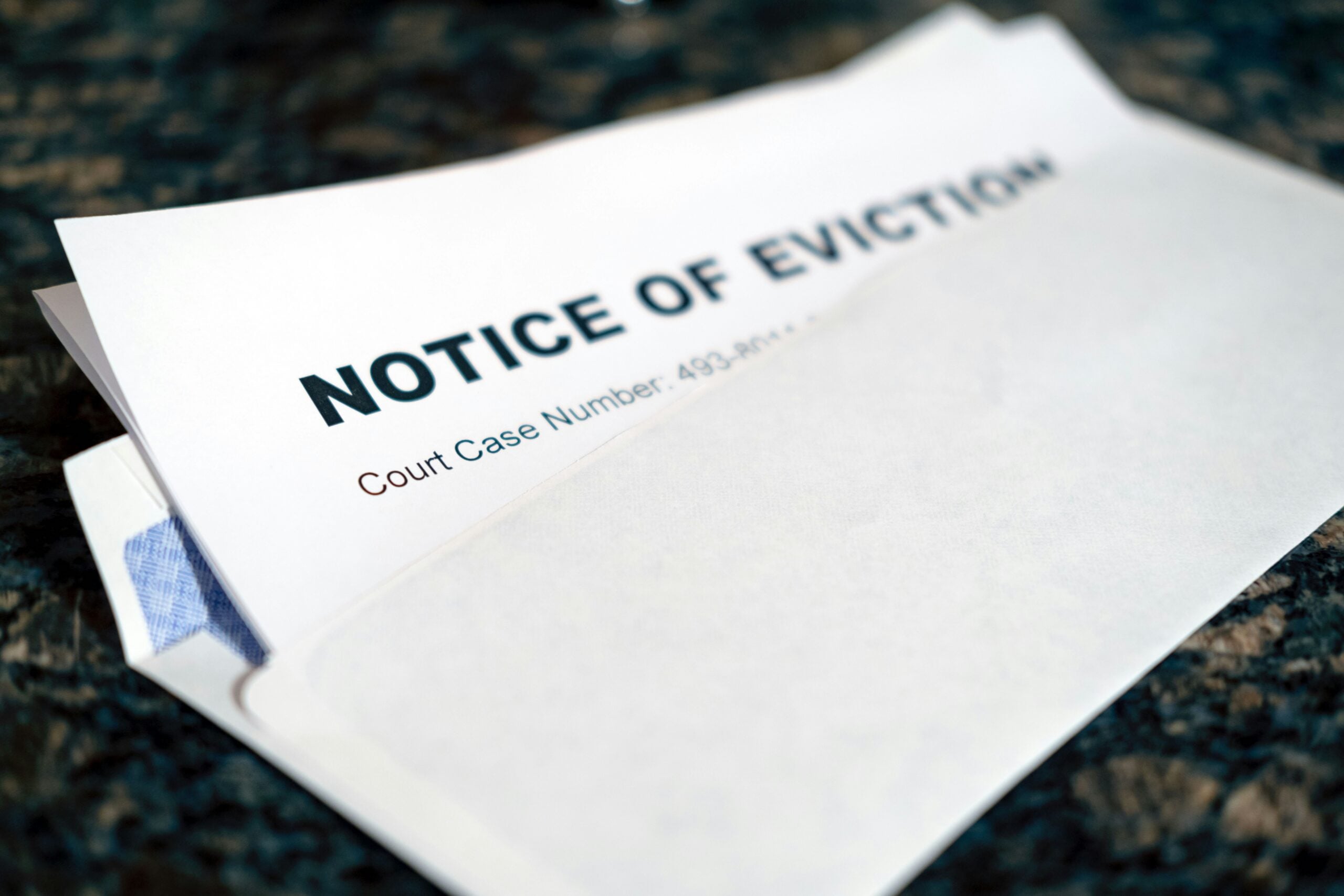
Generative AI has handed many multifamily residents a capability that once required hiring an attorney. With a few prompts, a resident disputing a deposit deduction, a late fee, or a maintenance delay can now produce a lengthy, statute-laden demand letter in minutes. A resident facing eviction can generate motions, discovery requests, and appeals at a pace no self-represented litigant could previously sustain. Defense attorneys representing landlords report a steady increase in this activity, and federal court data show self-represented Fair Housing Act filings rising sharply over the past two years, with practitioners attributing much of that growth to AI tools.
For multifamily operators, the practical effect is less about outcomes than about cost. AI-assisted correspondence and filings often rely on irrelevant law, misapplied statutes, or fabricated citations, and they rarely produce better results for residents than traditional self-representation. However, each document still requires review and often a response. And the volume can consume site team hours, regional attention, and outside legal spend far out of proportion to the value of the underlying dispute. Because AI has removed most of the effort that once filtered minor complaints before they reached a courtroom, disputes that would have ended with a phone call can now escalate quickly and stay active for months.
This report examines what the available data shows about AI-assisted resident disputes, introduces a four-stage escalation model for matching an operator’s response to a dispute’s actual risk, and addresses the complications that make the model harder to apply. Risks include legitimate claims hidden in formulaic correspondence, fair housing exposure from certain defensive tactics, and the discoverability of operators’ own AI systems. It concludes with implementation steps for dispute tracking, escalation training, response libraries, records management, and economically grounded litigation decisions that can help operators contain costs as AI-assisted disputes continue to grow.
What the data shows
The evidence base on AI-assisted resident disputes remains uneven. Defense attorneys report a clear shift in practice, and federal court data supports the trend. But no organization systematically tracks AI use in state housing courts, small claims courts, or pre-litigation correspondence, where most of this activity occurs. Operators should treat the figures below as directional indicators of a real shift rather than precise measurements of its scale.
Federal pro se fair housing litigation rose sharply in 2025. According to a Lex Machina analysis by Seyfarth Shaw’s ADA Title III team, self-represented plaintiffs filed 531 federal Fair Housing Act suits in the first nine months of 2025, compared with 421 in all of 2024. That’s a 69% jump in average monthly filings. Pro se ADA Title III suits rose 40% over the same period. Seyfarth partner Minh Vu attributed the surge largely to AI tools, writing that most pro se litigants the firm encounters use them. That link rests on the firm’s practice experience rather than on anything in the filings themselves. The figures also exclude state court cases and administrative complaints, which is where most fair housing grievances are filed.
The broader pro se surge provides context. A March 2026 working paper by MIT’s Anand V. Shah and USC’s Joshua Y. Levy found that non-prisoner self-represented litigants filed more than 41,000 new federal civil suits in fiscal 2025, compared with an annual average of roughly 23,000 between 2005 and 2022. The authors attribute much of the rise to generative AI, though critics argue other factors, including federal policy changes in 2025, may also be driving it. Federal FHA cases represent a small fraction of the housing dispute universe, however. The much larger volume of eviction, deposit, and habitability disputes moves through state and local courts, which publish far less comparable data.
Volume is rising faster than quality. Benjamin Young, an Atlanta litigation attorney at Williams Teusink who represents landlords, wrote in Multifamily Dive in September that AI-assisted pro se cases still make up a small share of the landlord-tenant disputes he handles but are becoming more common. In one matter, a self-represented tenant filed 22 separate pleadings between a Friday and a Sunday. Many were duplicative and almost all lacked legal or factual basis. None succeeded, but each had to be evaluated, and baseless motions can still require responses or hearings that slow the underlying case. The added volume doesn’t appear to translate into wins. Shah and Levy found that self-represented litigants still win fewer than 1% of federal cases, about the same rate as before AI.
Pre-litigation correspondence is changing first. Nadav Zohar, a partner at Kimball Tirey & St. John in Los Angeles, wrote in May that tenants increasingly use AI tools to draft demand letters and respond to attorney correspondence. He described the resulting letters as lengthy, abusive and confident, and said they frequently rest on irrelevant law or unsupported factual claims. A similar pattern has surfaced in the United Kingdom. Propertymark members report that letting agents are spending more time on long, legally worded and often inaccurate AI-generated complaints. The Property Ombudsman says complaints rose more than 50% year over year in the first half of 2026, which it attributes partly to AI. Chief Ombudsman Lesley Horton has also said that many AI-assisted complaints raise legitimate concerns.
Courts are slowly tightening standards. Judges have generally been reluctant to sanction self-represented litigants for AI errors. An FSBR Law analysis of the Charlotin AI hallucination database, published in August, found that only 41 of 679 U.S. decisions involving pro se litigants and hallucinated material resulted in monetary sanctions as of June. That posture is shifting. This summer, the District of Maryland issued a district-wide standing order reminding attorneys and unrepresented parties to verify the accuracy of filings, especially when relying on AI. In September alone, appellate courts in Washington, Oregon, and Idaho addressed fabricated AI citations from pro se litigants, and the Oregon court imposed a fine. Courts are also recognizing the burden on opposing parties. In a 2025 employment case that FSBR describes as involving voluminous AI-enabled pro se filings, a Delaware federal judge relieved the defendant of any obligation to respond to future filings unless the court ordered it.
An escalation model for AI-assisted disputes
Most operators currently handle AI-assisted disputes the same way they handle any resident conflict, routing them through site teams until they become serious enough to involve regional leadership or counsel. That approach worked when the effort required to escalate a dispute acted as a natural filter, because a resident had to invest real time and money to move from a complaint to a court filing. AI has removed most of that friction, so operators need an explicit model to recognize which stage a dispute has reached and assign the right response level.
Stage 1: AI-drafted correspondence. The dispute exists only as written communication between the resident and the property, typically a maintenance complaint, deposit challenge, fee dispute, or lease interpretation question rendered in legalistic language. At this stage, the appropriate response is a substantive reply from a trained site or regional employee that addresses the factual issue directly using pre-approved language. The reply should not rebut each cited statute point by point, but staff should confirm that none of the cited law actually applies to the facts before sending it. The objective is to resolve the underlying issue on its merits while avoiding a cycle of escalating correspondence. Zohar notes that many residents appear to paste each operator response directly into an AI tool to generate the next round.
Stage 2: Formal demand and agency threat. The resident has issued a formal demand with a deadline, threatened or filed a complaint with a housing, code enforcement, or fair housing agency, or referenced a protected class or accommodation need. This stage warrants review by a designated compliance or legal operations contact before sending any further response. A careless reply can create fair housing exposure that far exceeds the value of the underlying dispute, and any adverse action taken soon after a resident files or threatens a complaint can look retaliatory. Operators should treat any reference to disability, a health condition, accommodation, or protected class as a mandatory escalation trigger, even when it appears in passing or is buried in formulaic correspondence. Under federal guidance, accommodation requests need not use any particular wording.
Stage 3: Pro se litigation in state or local court. The resident has filed suit or is actively litigating an eviction, deposit, or habitability action without counsel. Not every such case needs more than routine handling. But once a case shows signs of departing from the ordinary path, such as an unusually sophisticated answer, a sudden stream of motions, or repeated unrelated claims, operators should bring in experienced litigation counsel before procedural activity accumulates. The explicit expectation should be to manage the matter as both a business process and a legal one. The key decision at Stage 3 is economic: weigh the cost of extended litigation, lost rent, staff time, and unit deterioration against negotiated alternatives. Young notes that a cash-for-keys agreement can cost less than months of procedural delay even when the operator would ultimately prevail, though he cautions it isn’t right for every situation. Buyout agreements also face disclosure and filing rules in some rent-regulated markets.
Stage 4: Federal or high-volume litigation. The resident has filed in federal court, typically under the FHA or, for leasing offices and other public-facing areas, ADA Title III, or filings have reached a level that materially disrupts operations in any venue. Stage 4 matters call for experienced litigation counsel and a deliberate strategy. That may include requests for show-cause orders on fabricated citations and motions to limit the defendant’s obligation to respond to repetitive filings. For documented serial filers, it may also include pursuing a vexatious-litigant designation or pre-filing restrictions, which some defense practitioners argue are more effective than monetary sanctions at stopping repeat AI-assisted filers. Those remedies require a detailed record of abusive filings, so document every fabricated citation and baseless motion from the start.
The model’s value lies in making escalation decisions explicit and consistent across a portfolio. Site teams gain a clear standard for when a dispute leaves their hands. Paired with consistent dispute tracking, regional leaders gain visibility into where disputes concentrate. And legal spend can shift toward early engagement on the matters most likely to become expensive.
The risks that cut both ways
The escalation model is straightforward on paper, but several operational realities make it harder to apply consistently across a large portfolio.
Some AI-assisted claims have merit. AI-drafted correspondence sometimes identifies real violations, including improper deposit deductions, notice defects, and unaddressed habitability issues. The UK Property Ombudsman says many AI-assisted complaints raise legitimate concerns. And U.S. residents have publicly described winning small claims cases with AI help, including a New York tenant who used ChatGPT to find that his deposit exceeded the state’s legal limit. Operators who dismiss correspondence because of its tone or apparent AI origin risk overlooking legitimate claims that will cost more to resolve later, particularly where deposit statutes impose penalties for bad-faith withholding. The appropriate posture is to evaluate every claim on its facts while declining to let the volume or style of correspondence dictate the response.
Defensive tactics carry their own fair housing risk. Zohar suggests converting correspondence to image-only PDFs, adding watermarks that prohibit AI upload, and calling out residents for relying on AI-generated language. These tactics require caution. Image-only documents are inaccessible to screen readers, and residents with disabilities may rely on AI tools for reading and writing assistance. A communication practice designed to slow down AI-assisted residents can create an accessibility or accommodation claim far more serious than the original dispute. Disability is already the most common basis for housing discrimination complaints. It accounted for nearly 55% of complaints in 2024, according to the National Fair Housing Alliance, and private fair housing organizations processed roughly three-quarters of them.
Fragmented records weaken the operator’s position. As operators centralize leasing, collections, and resident services, the context needed to defend a dispute can end up scattered across a PMS, a CRM, email inboxes, and individual employees’ phones. AI-assisted residents tend to generate a detailed written trail, even when parts of it are inaccurate, while operators may struggle to reconstruct when they received a maintenance request or what a community manager said in person. Young specifically warns against letting important resident correspondence live only on an individual employee’s phone, and recommends keeping written notes of significant in-person conversations.
Operators are also using AI on their side of the dispute. More portfolios use AI to triage maintenance requests, draft resident communications, and manage collections workflows. Those systems generate records that can become discoverable in litigation. In Philadelphia, City Council members and tenant organizers are developing legislation to limit landlords’ use of AI. They argue that automated systems mishandle repair requests and miscalculate arrears, triggering late fees and delinquency notices. Advocates have also raised concerns that some AI-handled repair requests leave no accurate written record. An operator’s own AI tools can therefore provide evidence for a resident’s claim, or fail to produce the evidence the operator needs. Any dispute-readiness assessment should include those systems’ accuracy and record-keeping.
The data gap limits planning. Because no systematic data tracks AI-assisted disputes in state housing courts, operators cannot benchmark their exposure against peers. Many portfolios also don’t tag disputes in a way that lets them measure their own trend lines, making it hard to justify investment in training, records infrastructure, or earlier legal engagement.
Building the systems behind the model
The escalation model works only if the surrounding systems support consistent decisions. The following steps give operators the data, training, documentation, and decision authority needed to apply it across a portfolio.
Instrument dispute tracking before the trend becomes a budget line. Operators should consistently tag resident disputes in the PMS or CRM, capturing the dispute stage, observable correspondence characteristics (such as length, statutory citations, deadlines, and frequency), the number of communications exchanged, estimated staff hours, and outside legal costs. Tags should describe the correspondence, not speculate about whether a resident used AI, since those records can become discoverable. Six months of tagged data can give leadership a baseline for legal budgeting and show whether disputes concentrate in particular markets, asset classes, or dispute types.
Codify escalation triggers and train site teams on them. Each stage of the model should include written triggers that site and regional employees can apply without legal training. These include any reference to disability, a health condition, accommodation, or protected class; formal deadlines or agency threats; court filings; any planned notice, fee, or lease action involving a resident with an open complaint; and sudden shifts in correspondence, such as a surge in volume, new legal arguments, or repeated unrelated claims. Training should emphasize that triggers determine routing, not judgment on the merits, so frontline staff neither ignore legitimate concerns nor try to litigate them by email.
Build a pre-approved response library reviewed by counsel. Operators should develop standard responses for the most common Stage 1 scenarios, including deposit disputes, fee challenges, maintenance timelines, and requests for repeated reconsideration. It should be written in plain language to address the substance of the issue. Responses that cite deposit or fee rules should have jurisdiction-specific versions. For Stage 2, the same templates can serve as starting drafts for the compliance reviewer, not as replies site staff send on their own. The library should default to accessible, text-based formats and include language that closes repetitive correspondence loops. For example, it can state that the operator has considered the resident’s position and will respond further only to materially new facts, without commenting on whether the resident used AI.
Close the records gap. Operators should require that all material resident communications be captured in a system of record rather than on personal devices; that significant in-person conversations be documented in writing promptly, ideally the same day; and that maintenance and collections records include timestamps sufficient to reconstruct a timeline. Operators should also review the AI tools used in maintenance triage, collections, and resident communications. That review should confirm that the original text of resident submissions is preserved, that outputs are accurate and logged, that retention settings don’t delete records that may be needed in a dispute, and that a human reviews outputs before they affect a resident’s account.
Give asset management a role in Stage 3 decisions. Litigation strategy for pro se disputes should account for total economic impact, including lost rent, projected legal fees, staff time, unit turn costs, and the realistic collectability of any judgment. A standard decision framework, with predefined authority levels for negotiated exits such as cash-for-keys agreements, lets operators resolve disputes quickly when, as Young puts it, delay itself becomes the strategy. Applying the same criteria to every case also helps operators show that they handled disputes consistently. Counsel should review any negotiated exit for local buyout rules.
Preparing for the next wave of AI-assisted disputes
Generative AI has changed the economics of resident disputes more than it has changed their outcomes. Residents can now produce correspondence and filings at a volume and level of apparent sophistication that previously required an attorney. The evidence suggests that output rarely translates into better legal results, but it often increases operating costs, lengthens timelines, and puts greater demands on site and regional teams.
The four-stage escalation model discussed in this report gives operators a structure for matching their response to a dispute’s actual stage and risk, rather than letting volume or tone set the level of effort. Applied consistently, the model concentrates legal spend where it prevents the most expensive outcomes, reduces the fair housing exposure reactive or dismissive responses can create, and treats procedural volume as a real operating cost.
Operators that build dispute tracking, clear escalation triggers, disciplined records practices, and economically grounded litigation decisions now will be better positioned to absorb continued growth in AI-assisted disputes while limiting the growth in legal costs and unit downtime. Courts are tightening standards for self-represented filers, but residents’ AI tools will keep improving, and the gap between AI-assisted filings and successful ones may narrow. In either case, operators with the cleanest records and most consistent response processes will have a durable advantage in protecting NOI.
– Nick Pipitone
This report is provided for informational purposes only and does not constitute legal advice. Insights by Blueprint is not a law firm, and its authors are not attorneys. Laws governing landlord-tenant disputes, fair housing, accessibility, and court procedure vary by jurisdiction and change frequently. Operators should consult qualified legal counsel before adopting any policy, communication practice, or litigation strategy discussed in this report.