

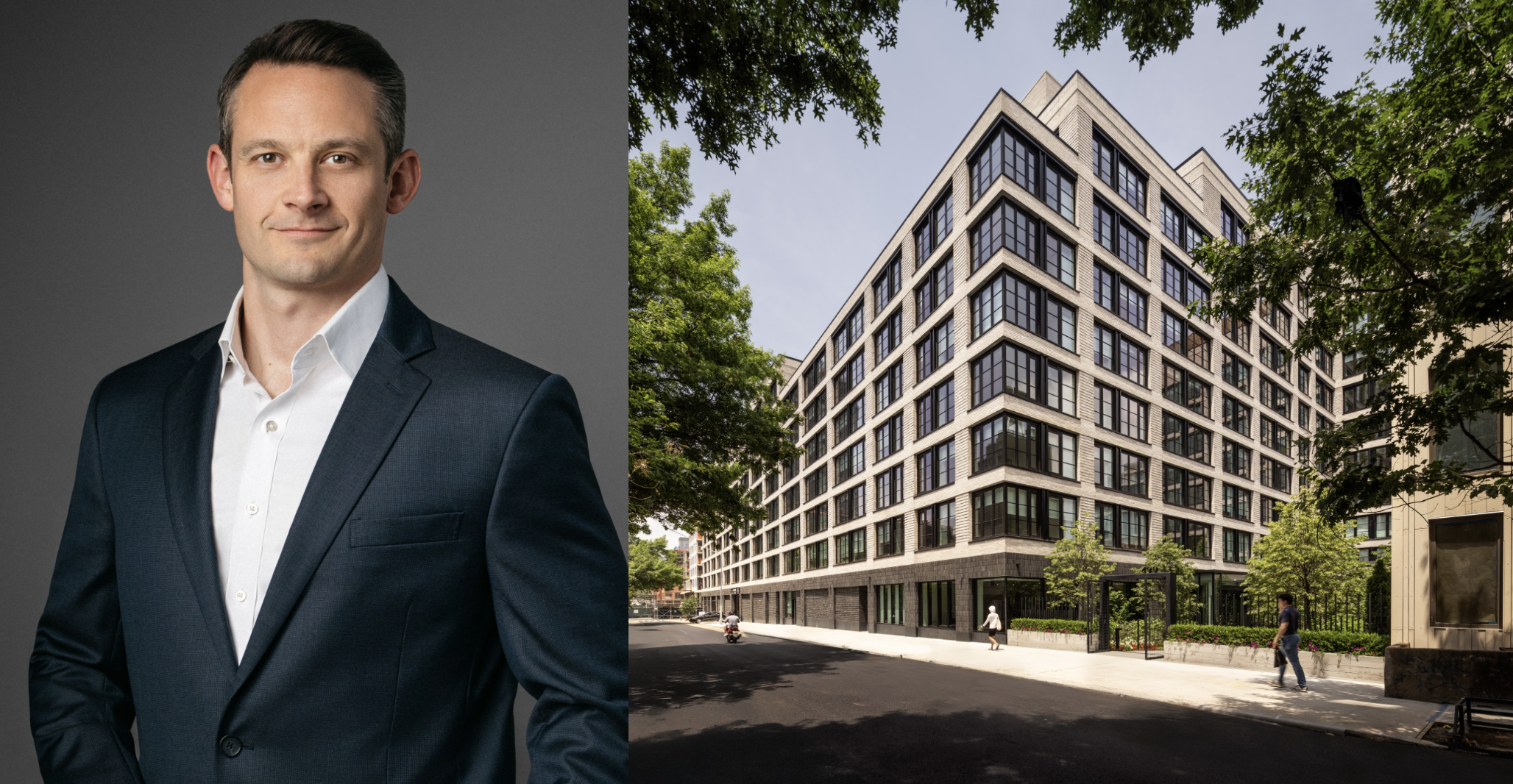
Joe Porritt leads leasing, marketing, and resident engagement at The Brodsky Organization, a third-generation New York family office with roughly 9,000 apartments across Manhattan and Brooklyn. Over a decade at Brodsky, his role has steadily expanded — from leasing, to marketing and communications, to the launch of Brodsky Neighbors, the firm’s resident engagement platform.
As of January, his mandate grew again to include modernizing Brodsky’s technology stack. That puts him in the middle of a question every owner-operator is wrestling with right now: how to evaluate and deploy a wave of new proptech and AI tools across a portfolio that is anything but uniform. We talked with Joe about what it takes to find tools that fit an architecturally diverse portfolio, why New York is its own animal, and where he thinks AI will actually move the needle.
Joe is speaking at Blueprint this September, where he will join more than 2,500 real estate owners, operators, and technology innovators.
BH: For people unfamiliar with Brodsky, tell us about the firm and its portfolio.
JP: We’re a third-generation family office with 9,000 apartments across Manhattan and Brooklyn. The portfolio is architecturally very diverse — everything from walk-ups in the West Village to prewar hotel conversions throughout Manhattan to a collection of brand-new construction. Each of those represents one of the three generations of the business.
It makes for an interesting portfolio. We’ll have residents who come into the system living in the Village while they’re at NYU and are still with us 15 or 20 years later, living in a new high-rise in Brooklyn with a couple of kids. It’s a company built around very long-term residents.
BH: And your role there has expanded a lot, tell us about the journey and where you’re focused today.
JP: I started at Brodsky 10 years ago in a leasing role.Pretty quickly the company added marketing to my scope, which included PR and comms, and then the next round added resident engagement. Before that I was VP of Leasing at Related.
One of my first initiatives was creating the concept for Brodsky Neighbors, a resident engagement platform that connects our renters with local businesses. We host events and offer perks and discounts at neighborhood spots. It’s been a great tool on two fronts: it provides economic sustainability to the neighborhoods we operate in, and it creates a stronger sense of connection between residents and local businesses. That comes in handy at renewal time — and when there’s a leak, we find there’s a little more forgiveness.
The most recent step was technology. As of January, they asked me to take a long, hard look at our tech stack and run the modernization of the whole thing. We haven’t fully deployed AI across the portfolio yet — we’ve spent time observing and talking to friends in the industry about the systems they’re using — but we’re now moving in the direction of deploying a lot of it.
BH: What does your tech stack look like today?
JP: Yardi Voyager is our accounting backbone. We use Yardi’s RentCafe CRM Flex product on the leasing side, and BuildingLink for resident operations. Payments run through Yardi. The CRM and BuildingLink are the two key components of the customer journey: prospects find us and come in through the CRM, and once they’ve applied and signed a lease, we move them into BuildingLink.
BH: To the extent you can share — what’s working and what’s not?
JP: The honest answer is that the existing tech stack has at times felt disjointed. We have these different solutions, but they don’t necessarily speak to each other, and over time that’s created a disjointed customer experience.
What we really want is one cohesive ecosystem where all the tools talk to each other — a frictionless path from the moment someone finds us through the moment they get their renewal and decide to stay.
BH: You’ve been talking to a lot of your peers. What do you see other operators getting right and wrong?
JP: This isn’t just about where they’re getting it wrong. We’ve piloted products and made our own mistakes too. But one thing I keep seeing is that some operators get seduced by the technology and the pitch, and they go all in on a solution before assessing whether it’s actually a good fit for their business.
If you run a portfolio where the product is fairly uniform, you’re more likely to find an effective one-size-fits-all solution. We don’t have that. Our architecturally diverse portfolio — walk-ups, hotel conversions, new construction — creates idiosyncrasies between asset types, and those bear on everything from how we staff buildings and leasing offices to whether we run a single office in a building or a central leasing office, all the way through our policies and best practices.
That makes it hard to prescribe one solution that’s equally effective across the portfolio. I might know a product would crush it in our brand-new Brooklyn buildings, but how does it fare across the 500 units we have spread out across the Village? That’s one of the hardest parts of evaluating these products, and it’s a challenge for a lot of the family offices operating in New York.
BH: When you ask vendors for references, you specifically ask for New York family offices. Why both qualifiers — and why New York?
JP: I’m not a native New Yorker; I’ve been here 10 years. Before I came, I used to roll my eyes when New York friends and colleagues told me how different it is here — I assumed “different” just meant they thought it was better. Now that I’ve been here a decade, I can tell you it really is different. The demand structure, the regulatory environment, the culture, customer expectations, the supply-demand imbalance — all of it is unlike most other markets, and all of it bears on what works and what doesn’t.
So my advice to any vendor coming into New York is to make sure you understand this market. You may have Greystar locked in, or a regional player in Texas or the Carolinas running on your platform, but you can’t assume it’ll work when you get here. The regulations, the culture, the supply-demand imbalance — combined, they create a genuinely unique environment.
BH: What’s an example from your experience of how New York is different?
JP: My first job at Related was as a leasing manager on a brand-new lease-up in Chicago, around 2012. All of us leasing managers across the different buildings were on one email thread, and once a week we’d reply-all and share our numbers — how many leads, how many tours, how many deals we signed. We just gave it all away.
I’ll never forget being on a call with Frank Monterisi, a developer at Related. I was telling him how many apartments a competing building still had available and what they were renting at, and he said, “How do you guys get all this information?” I said, “Oh, they just gave it to me — we all reply-all and share everything.” He couldn’t believe it.
That was the perfect example for me of how differently things operate. In Chicago there was this friendly competition, almost a camaraderie. In New York, everybody plays their cards much closer to the chest.
BH: What are you looking for from technology — and what do you wish existed that doesn’t?
JP: Let me start with what I wish were a bigger part of the picture: onboarding. The companies leaning in on AI as their primary value proposition tend to also lean on AI as their onboarding and support mechanism. They want to refer you to a help center.
But I’ve got a resident or a prospect standing in front of me with a real problem. I can’t watch a 20-minute video and hunt for the answer — I need to talk to someone who can solve it right now. And sometimes even the AI companies’ own AI support tools aren’t good at getting you the answer in the moment. That creates a ton of friction at the site, it hurts adoption, and it makes these tools hard to roll out. My advice to anyone going to market: really sell how frictionless your onboarding is. The best technology in the world won’t deliver results if your teams can’t adopt it.
As for what I wish existed — it’s probably out there and I just haven’t seen it — strong, reliable predictive analytics. Historically we’ve worked with dashboards and data that tell us what already happened. What I’m looking for now are systems that tell us what is likely to happen next and, more importantly, what actions we should take. The future isn’t better dashboards, it’s better decisions. The other thing I’d love to see is better interoperability between systems. Operators shouldn’t have to stitch together five different platforms to create a coherent resident experience.
BH: Outside of tech, is there a trend you’re watching?
JP: We recently did a lease-up in Brooklyn — 499 President — and noticed an interesting pattern. A group of residents was moving in that we couldn’t quite figure out at first. They were baby boomers returning to the city.
Boomers coming back isn’t new, but the reason was. Many were coming back because their kids were having kids in Park Slope, and the kids couldn’t afford the apartment plus a nanny plus childcare. So the parents were moving back into the city to help raise the grandkids. It’s a kind of multigenerational convergence in the rental space.
That could be a good thing, because it might keep young families in the city. When my wife and I had our first kid in Brooklyn and got pregnant again three months later, the walls started closing in and we didn’t have family here. If developers saw this as an opportunity and built around the trend, I think it’d be a real win for the city — you’d keep people longer, and there’s pent-up demand there.
BH: Where do you think AI actually pays off in multifamily?
JP: I think many people focus on AI’s potential to reduce costs. There will certainly be efficiencies there. But where I’m most interested is its ability to improve conversion, customer experience, retention, and ultimately revenue.
In New York, we don’t need to improve top-of-funnel metrics; the demand is there. What we’d love to do is improve our efficiency and conversion, which gives us more pricing power. Same with resident experience. Used well, AI doesn’t mean reducing headcount — it means empowering the people we already have to do more. That’s where I see it ultimately paying off.
BH: What are you most excited to dig into at Blueprint?
JP: Honestly, the chance to learn from peers. I’m relatively new to this side of the business — I went to my first tech conference in March of this year and became completely energized about the potential. So much of how we’ve evaluated tools so far has come from talking to other operators about what’s actually working for them, and Blueprint puts a lot of those people in one room.
I’m especially interested in how others are thinking about deploying AI across diverse portfolios, and in finding the groups working on real predictive analytics rather than just better dashboards. And I’m always happy to compare notes on what makes New York its own market. If I leave with a few new relationships and a clearer view of which tools fit a portfolio like ours, that’s a win.