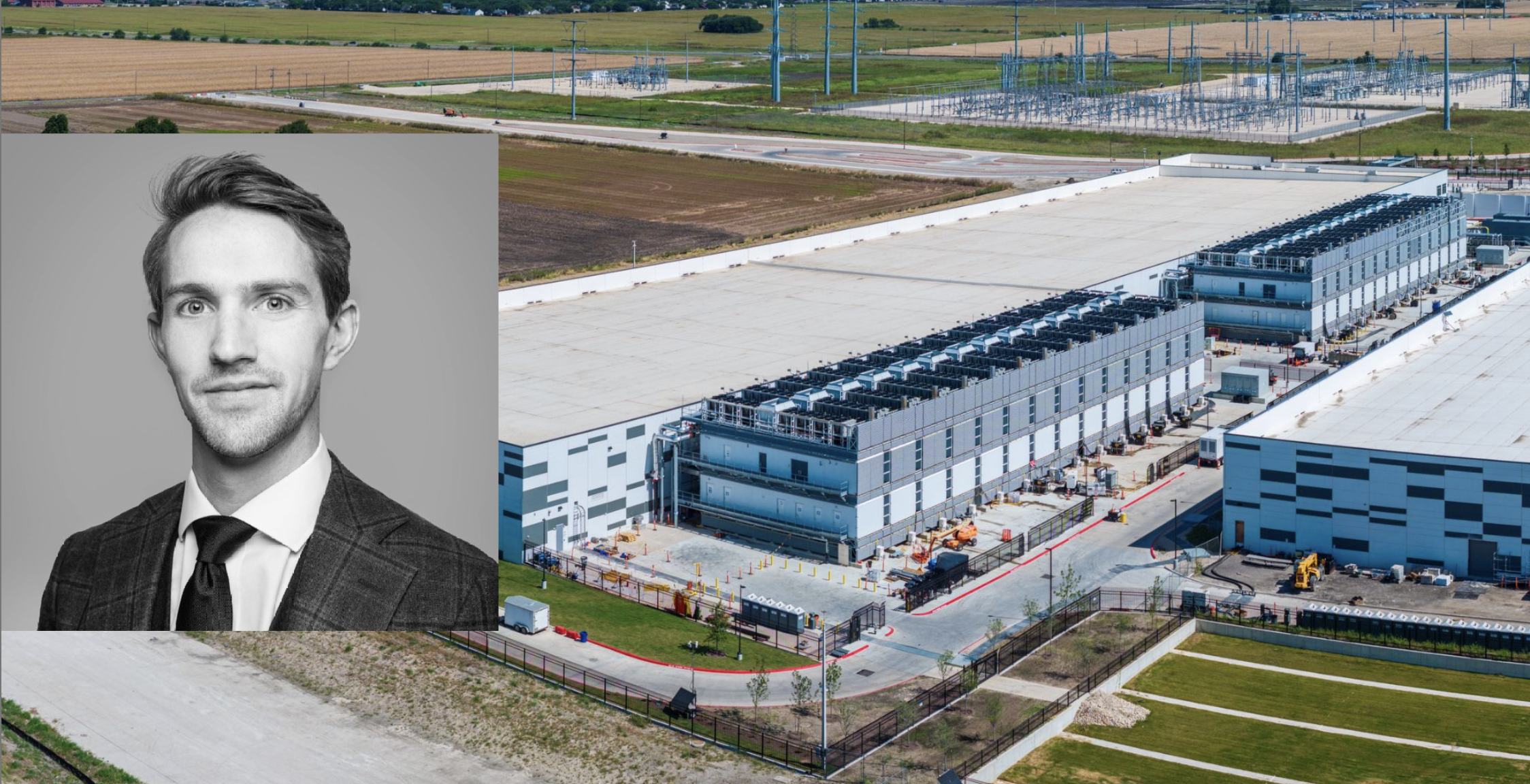

Construction is a $10 trillion global industry that has pulled off something almost no other sector has managed: getting less productive across six decades. KP Reddy has spent his career convinced that the fix will not come from selling better software to the firms that build things. It will come from building and buying those firms outright. A second-generation civil engineer, three-time exited founder, and General Partner at Shadow Ventures, Reddy has operated at the intersection of AEC, AI, robotics, and automation for more than 25 years.
His latest venture is the most direct expression of that thesis to date. In March 2026, Reddy launched Zero RFI, an AI-native company that raised a $13.8 million seed round led by General Catalyst. Zero RFI acquires traditional construction management firms, owner’s reps such as Brookwood Group and BuildingWorks, and integrates proprietary AI to strip out the friction, and the RFIs, that stall complex projects.
Reddy will take the stage at Blueprint in Las Vegas from September 22 to 24. His session, titled “Putting Your Money Where Your Mouth Is,” examines the new breed of founder that does not merely sell innovation but acquires the portfolios to prove it works. He is one of hundreds of founders, operators, and investors on the program across three days of stages, workshops, and deal-making. The conversation below, lightly edited for length and clarity, previews the thinking Reddy plans to bring. Operators weighing how AI and vertical integration will reshape construction and property management will find the trip to Blueprint well worth it.
BH: Tell me a little about the ecosystem of things you’re working on and how it all fits together.
KPR: My mission ever since my last exit about 15 years ago has been figuring out how to move this industry forward. Early on, a lot of that was community building, asking whether there was even a place to go if you wanted to build a startup in this space. The first version of that was consulting. I did a lot of innovation work for ENR 500 firms. The big one was Thornton Tomasetti, where we spun out six companies. We still do that work today.
From there I started looking at startups and asking whether there were any VCs who actually understood construction and boots-on-the-ground ideas. That’s what led to Shadow Ventures, focused on pre-seed and seed. A lot of the same people I’d been consulting for became LPs, and they agreed there was a real role for early-stage capital.
The writing came out of something else entirely. I write a thousand words a day, and I started that seven years ago for my ADHD. If I can get all the words out first thing in the morning, I have a more focused, productive day. It was never a commercial endeavor, but some of it turned into a couple of books.
Then about three years ago I looked at what was happening with AI and realized that what I spent $10 million building 15 years ago, I could now do in a weekend. So we picked up and moved the family to Northern California, because that’s where the capital and talent are concentrating. I decided the answer wasn’t more software. It was creating next-generation firms that operate differently: owner’s rep, construction management, architecture, engineering. And these firms aren’t going to transform themselves. I didn’t want to just consult, because with consulting you make recommendations and people do whatever they want. The only way to actually do it is to buy the firms. So now I have a consulting practice that does very well on AI transformation, the ability to write pre-seed and seed checks, and the ability to buy companies and transform them.
BH: Is that what Zero RFI is? You’ve described it as a private equity play. Tell me how you think about it.
KPR: Initially we thought of it as a rollup or holding company. Then we realized we’re actually pretty good product people. With every acquisition, we started to see that there was an AI-native version of that company worth creating, but it didn’t always make sense to build it inside the existing business.
Brookwood is a good example. They’re a classic owner’s rep: they staff your project, manage the bills, do all of it. If you’re a school system, that’s exactly what you want. But if you’re a new kind of developer asking why you aren’t using more AI, we have a parallel, AI-native version of that service. We keep the two separate from a brand and team perspective. Meanwhile, the traditional businesses have access to all the same platforms, they’re just using them behind the scenes. The customer doesn’t care how it gets done; they just want the outcome.
So it shifted from a pure holding-company strategy to something where we transform the companies we acquire and spin off net-new, AI-native services from them. Now you can actually buy things from Zero RFI, not just hold companies under it. And it’s been fascinating: some of the firms we acquire will say, ‘We always wanted to be in this other business, but the margins were too thin to serve it.’ We take a business they didn’t want to be in, a 10-point-margin business, and by making it AI-native, we turn it into a 60-point-margin business.
BH: Do you see Zero RFI as a heavy focus on rolling up owner’s rep services, or as the first of many PE verticals?
KPR: We’re going to stay in construction. The plan is to roll up as many owner’s rep firms as possible, and we have a healthy pipeline there. From there, we’re selectively looking at architecture and engineering firms. We’re not chasing the national multidisciplinary firms doing schools and data centers. The firms we’re interested in are usually under 200 people, with a strong niche. They do all the retail work in the Midwest, or all the tenant improvement in commercial office in certain markets. Companies that have become very focused but aren’t especially diverse. Those are the ones we think we can really transform.
If you’re an architecture firm cranking out 40 TI projects a month, we know we can help with that. And we can expand the offering from there, into how they think about space management and how they think about facilities management. We come in under one specific service line and grow from there.
BH: This vertical integration idea, the notion that the best software businesses won’t just sell into incumbents but will build their own verticals and compete with them, do you think that’s a broader secular trend?
KPR: Yes. If you go back to first principles on building a building, there are a few drivers. Nobody wants to manage and hire all these people. There’s been enormous dispersion of talent and specialization. And no owner is actually excited about the drawings they get. They want the building, on time, on budget, doing what they need it to do. All the work product in between that architects and engineers think is so important, the owner mostly doesn’t care about.
Think about the history of the master builder. There used to be one person you hired who did everything, and architect and engineer were the same role. Over time, buildings got more complicated, everything specialized, and now you have 200 different companies working on a single building. All that specialization created inefficiency and interoperability problems. So there’s a massive market around vertical integration, as long as the end customer benefits. My PE friends talk about vertical integration as a way to juice more margin out of a business. Sure. But if you’re not delivering a better outcome to the customer, none of that matters.
Zero RFI is backed by General Catalyst and a lot of others around the hoop, and you’re seeing these markets develop. The big difference is that these aren’t businesses you spin out of YC. It’s not ‘I dropped out of Stanford and now I’m innovating HVAC systems.’ You have to have actually done things, not just in the digital world but in the physical world. And it’s getting harder to justify just selling software. Look at Salesforce. I have a lot of friends in the C-suite there. When was the last time they launched a product where anyone said ‘did you see what Salesforce released?’ They bought Slack, they bought Tableau, they just bought Fin. You couldn’t build a chat agent? The incumbent software companies are starting to look like PE firms. My prediction is that most of these public SaaS companies go private. If you’re not being rewarded in the public markets on enterprise value, and you’re not a capital-intensive business that needs public markets for favorable debt, why be there? Especially when most of these deals are cash anyway.
BH: On stage you’re alongside Jessica Beck and Alex Samoylovich, who are both building vertically integrated businesses on the property management side. What are the parallels with what you’re doing?
KPR: I think the big unlock for property management vertical integration is going to be robotics, because it’s the intersection of the physical space. If you look at what I’m doing at Shadow, we haven’t made a software investment in 18 months. It’s been autonomous dozers, robotics, material science, because ultimately all of this starts to come together. In property management, everyone seems focused on the customer-service side: automating the scheduling of service providers and so on. It’ll be more interesting to watch how it evolves toward robotics and deployment.
One big property management company asked me, ‘KP, you’ve built robotics companies, can you build me a robot that opens and closes doors?’ I thought it was fascinating. You can have the vacuuming robot or the pressure-washing robot, but none of them can open and close a door. Someone still has to open the door. It reminds me of one of Waymo’s problems. Apparently when a passenger leaves the door open, the car has no way to close it, so there’s a whole secondary market of gig drivers who get hired just to go close the door of a Waymo. That’s exactly the kind of physical gap that’s still wide open.
General Catalyst is interesting here. They built an entire program around AI rollups. Their view is that they’re big investors in Anthropic, so they check the box on foundational AI, and everything else is applied AI. We’re their construction play. They have another doing HOAs, others in accounting, legal, and so on. Alex Taubman at Long Lake has been buying up HOAs and applying AI to make them more efficient, and just took American Express Business Travel private for around $6.2 billion. We operate as a cohort, and everyone is still trying to figure out the same next step: the intersection of digital optimization using AI and physical optimization. That’s going to be the big unlock.
Right now most property managers are still thinking about centralization as the path to economies of scale, which I get. Going from 20,000 to 50,000 units, a centralized team gets far more efficient. But is that the biggest lever? Probably not.
BH: Last question. What are you excited about coming to Blueprint?
KPR: I’m a guy who feeds on chaos, and we’re in a moment where startups aren’t sure what the next move is. Any VC who tells you they know the next move is lying to you. So much of my life is talking to people, observing them, and building enough pattern recognition to form a position, and then defending it, because I’m in the public eye enough that my phone will blow up if I can’t back it up with facts and a point of view.
What I’m really looking forward to isn’t what people say on stage, it’s what they say after they get off stage. I’ve had founders tell me, ‘We just raised a round and we’re thinking about giving the money back.’ I really believe the next five years will define the next hundred. When I talk to founders working on something inconsequential, some nice little SaaS business, another self-touring lease app nobody needs, I tell them they’re wasting their lives on it. Tell your VCs you’re shutting up shop, send back whatever cash is left, and go do the thing that matters. I’ve said that to founders in my own portfolio: shut it down, you’re too talented for this. Those little side conversations at the bar are what I love most.