
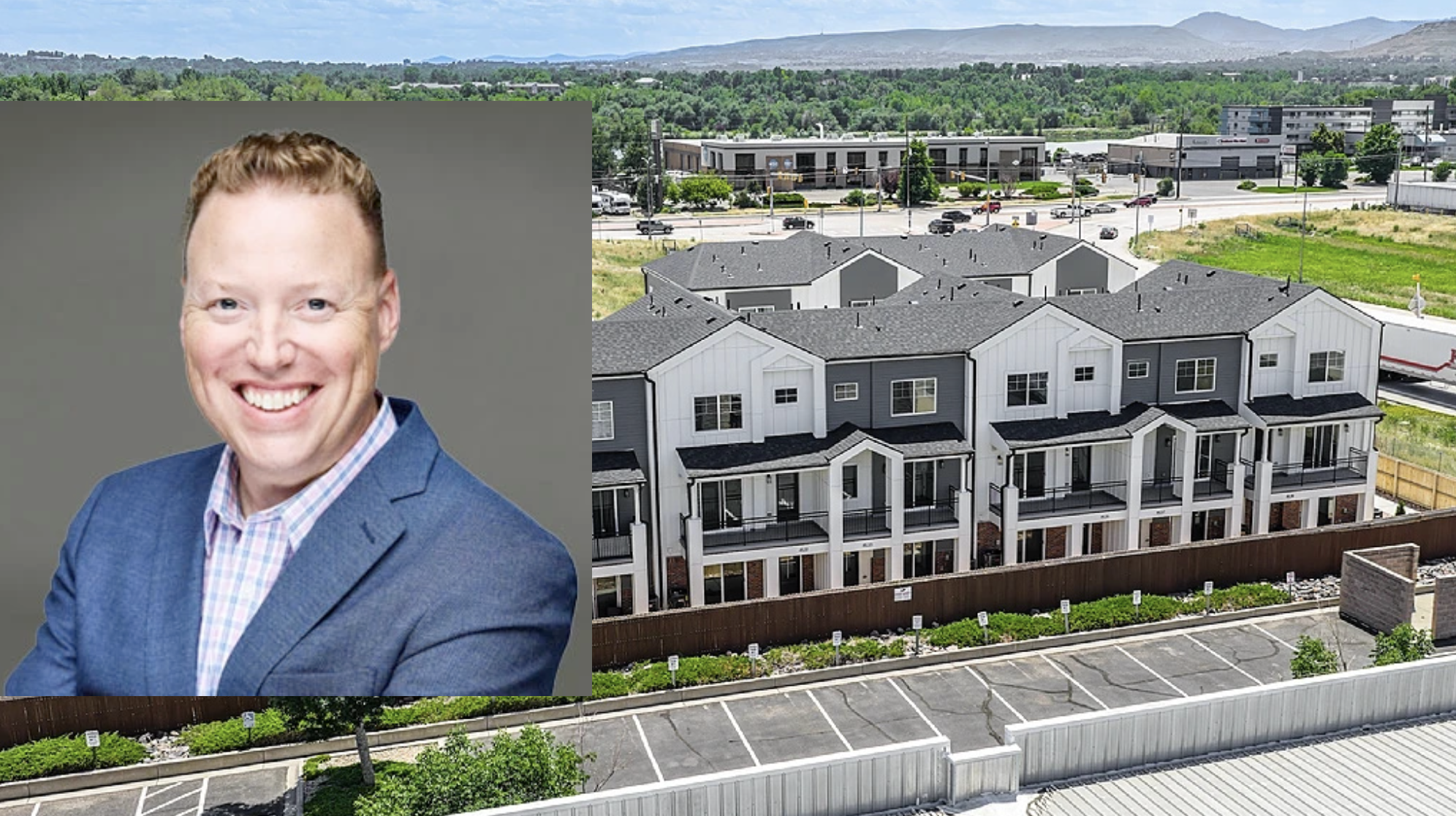
Few executives have watched the institutionalization of single-family rentals up close the way Tony Julianelle has. As CEO of Atlas Real Estate, Julianelle has spent the better part of a decade turning a Denver investment shop into a multi-state operating platform. The company now manages more than 6,000 residential units and $3.5 billion in assets across 15 states, with a model built to serve both individual investors and institutional capital.
Atlas’s growth has tracked a broader shift in the industry: single-family rentals and build-to-rent communities moving from a cottage business of local operators into an asset class institutions actively compete to own. Atlas’s recent expansion into new markets, including Georgia and Wyoming, reflects a thesis Julianelle has been refining for years: that execution and operating discipline, not appreciation, are what separate winning portfolios in a market where rent growth has flattened nationally.
Julianelle will take the stage at Blueprint in Las Vegas from September 22 to 24, where his session will examine the new SFR operating playbook. He’s one of hundreds of founders, operators, and investors on the program across three days of stages, workshops, and deal-making. The conversation below previews the conversations Julianelle plans to bring to the Blueprint stage. Operators curious about where SFR and BTR investment is headed will find the trip to Vegas well worth it.
NP: Atlas Real Estate does a lot under one roof, including brokerage, property management, institutional acquisitions, and investment. What’s the thread that ties it together?
TJ: It started as an investment company, and everything we’ve added since has been in service of the same idea, helping people build wealth through real estate, whether that’s an individual buying their first rental or an institution deploying capital at scale. The mission we operate under is “Uplift Humanity Through Real Estate,” and it sounds aspirational, but it’s actually pretty practical. It means we’re not just managing units; we’re trying to make sure the resident, the operator, and the investors all come out ahead.
What that’s required operationally is building a platform that can serve very different customers with the same infrastructure. A first-time investor buying a duplex and an institutional owner with a few hundred units in a new market need different things from us, but they’re running on the same systems, the same local market expertise, the same maintenance and leasing infrastructure. That’s the unifying piece: one operating platform, multiple ways in.
NP: You started in fix-and-flip and have moved toward long-term hold and institutional partnerships. What drove that shift?
TJ: Fix-and-flip taught us a lot about markets and renovation, but it’s a transactional business. You make money once, and you’re done. Long-term hold is a relationship business. Once we shifted our own focus to long-term investment, the property management side of the business became the real engine, because the better we manage an asset, the more value we create for the owner year over year, not just at the point of sale.
That’s also what made us attractive to institutional capital. An institution isn’t looking for someone to find them a deal. They’re looking for an operating partner who can run a portfolio with the discipline of a property manager and the market judgment of an investor. We built the platform to be that partner, and the growth into new markets has mostly come from owners and institutions wanting that combination rather than having to stitch together a broker, a manager, and an asset manager separately.
NP: How do you decide which markets to enter? You’ve expanded into places like Georgia and Wyoming recently, which aren’t the obvious coastal growth markets.
TJ: We look at migration trends first – where are people actually moving, and why. Then we look at the constraints on new supply, because a market can have great population growth and still be a bad investment if it’s overbuilt. Cheyenne, Wyoming, is a good example. It’s not a market most people are talking about, but it’s seeing real demand tied to data center and infrastructure investment, and that kind of demand tends to be durable because it’s driven by employment, not speculation.
The honest answer is we’re trying to get a read on tomorrow’s renters today, the same way we’d want a read on tomorrow’s market before everyone else has priced it in. By the time a market shows up on every institutional buyer’s shortlist, the returns have already compressed. We’d rather be early and right than crowded and average.
The other thing in play here is that clients we currently serve are asking us to join them in new markets because they’ve benefitted from the Atlas Advantage on assets they already own. That’s our favorite way to enter a new market, having a current client pull us there with them.
NP: Has anything surprised you about how institutional owners want to engage once you’re managing their assets?
TJ: The demand for transparency is higher than it’s ever been, and rightly so. Institutional owners want to see leasing velocity, expense ratios, and occupancy in close to real time, not in a quarterly report. We’ve had to get much more disciplined about reporting and data because of that, and honestly, it’s made us a better operator across our entire portfolio, not just the institutional side.
What’s surprised me more is how much owners care about resident experience now. Five years ago, an institutional owner mostly wanted to know about NOI. Now they’re asking about resident retention programs, renewal rates, and things like our Uplift Program, which helps long-term renters move toward homeownership. There’s a growing recognition that a resident who feels good about where they live renews, and renewals are cheaper than turns. That’s a genuinely different conversation than the one we were having a few years ago.
NP: Rent growth has flattened in a lot of markets nationally. How does that change the way you think about underwriting and operations?
TJ: It means you can’t underwrite appreciation and you can’t manage on autopilot. When rents were running up 8-10% a year, a mediocre operator could still look good. That’s not the environment anymore. The differentiator now is execution: expense control, occupancy discipline, and how fast you turn a unit, how well you retain a resident. None of that is glamorous, but it’s where the returns actually live right now.
That’s pushed us to invest more in the maintenance coordination, vendor management, and the systems that keep a portfolio running efficiently at scale. Our partner Net Energy has helped us cut the carbon footprint of the homes we own and operate by more than 60%, and the original motivation was sustainability, but it’s turned into a real cost lever too. Lower utility costs and fewer maintenance calls add up across a few thousand units.
NP: Where do you see single-family rental and build-to-rent investing headed over the next few years?
TJ: I think the institutionalization of the space continues, but I don’t think it looks like a handful of giant players owning everything. It looks more like a layer of operating platforms. Companies like Atlas, that have the local market knowledge and the systems to run thousands of scattered or semi-scattered units efficiently, partnering with institutional capital that wants exposure to the asset class without building that operating muscle themselves.
The build-to-rent side specifically is going to keep growing because it solves a real supply problem. It’s a purpose-built rental product in markets where for-sale housing has gotten out of reach for a lot of renters. The operators who win there are going to be the ones who treat it like a hospitality business, not just a leasing business. That’s been our bet for a while, and I don’t think we’re wrong about where this is heading.
NP: What are you most excited about at Blueprint this year?
TJ: Blueprint is one of the few places where the SFR and property management industry gets genuinely honest about what’s working and what isn’t. I’m most excited to reconnect with peers wrestling with the same growth challenges we are at Atlas, and to walk away with a few ideas we can actually put to work.
– Nick Pipitone