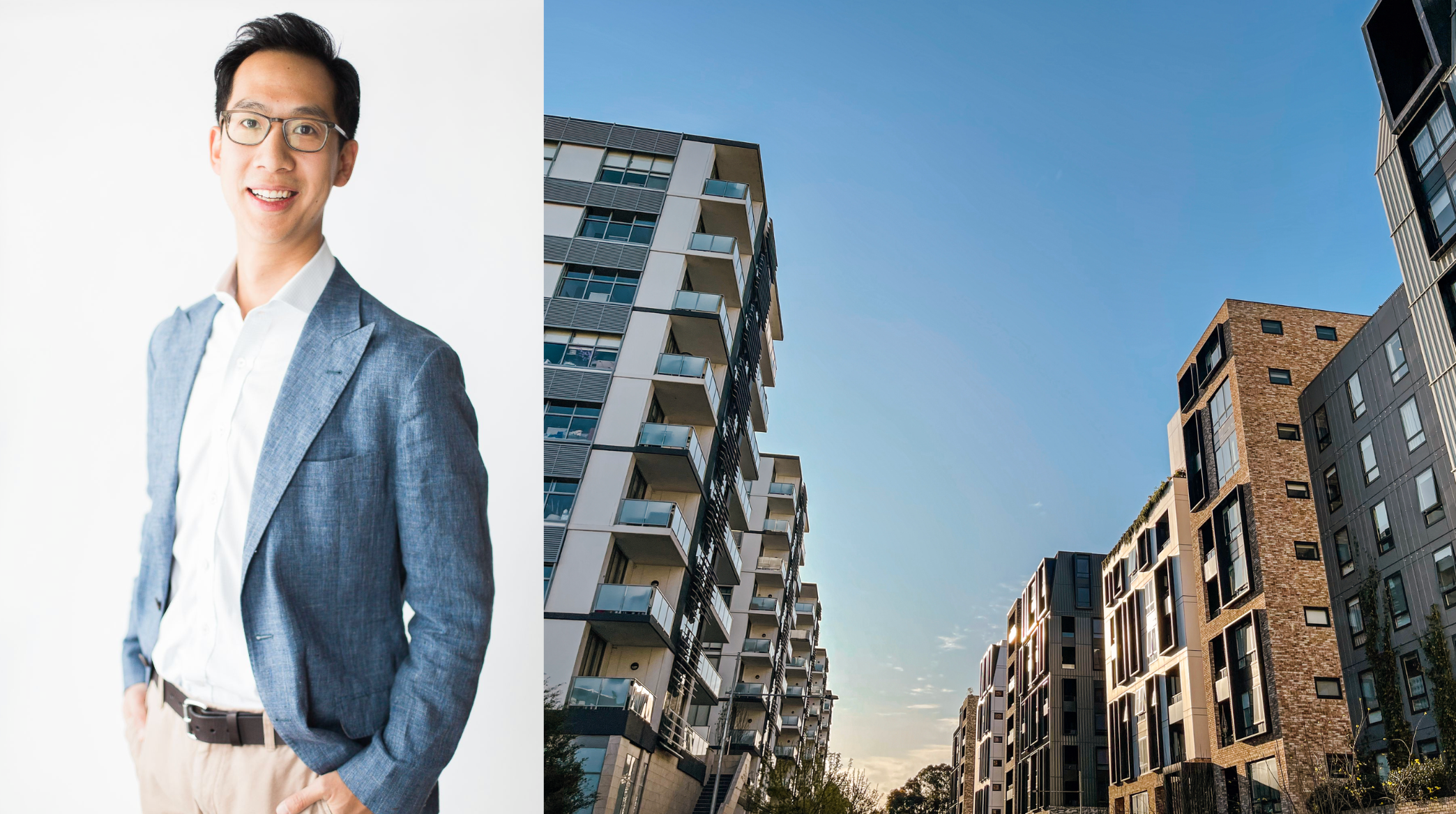

Flexnode’s pitch is straightforward: any general contractor can become a data center builder if someone hands them a system with the guesswork engineered out. That’s the premise Andrew Lindsey, Founder and CEO at Flexnode, is bringing to Blueprint this year. Lindsey, who heads the modular AI infrastructure company, will join compute, capital, and general-contracting players on a panel about the data center supercycle reshaping real estate development.
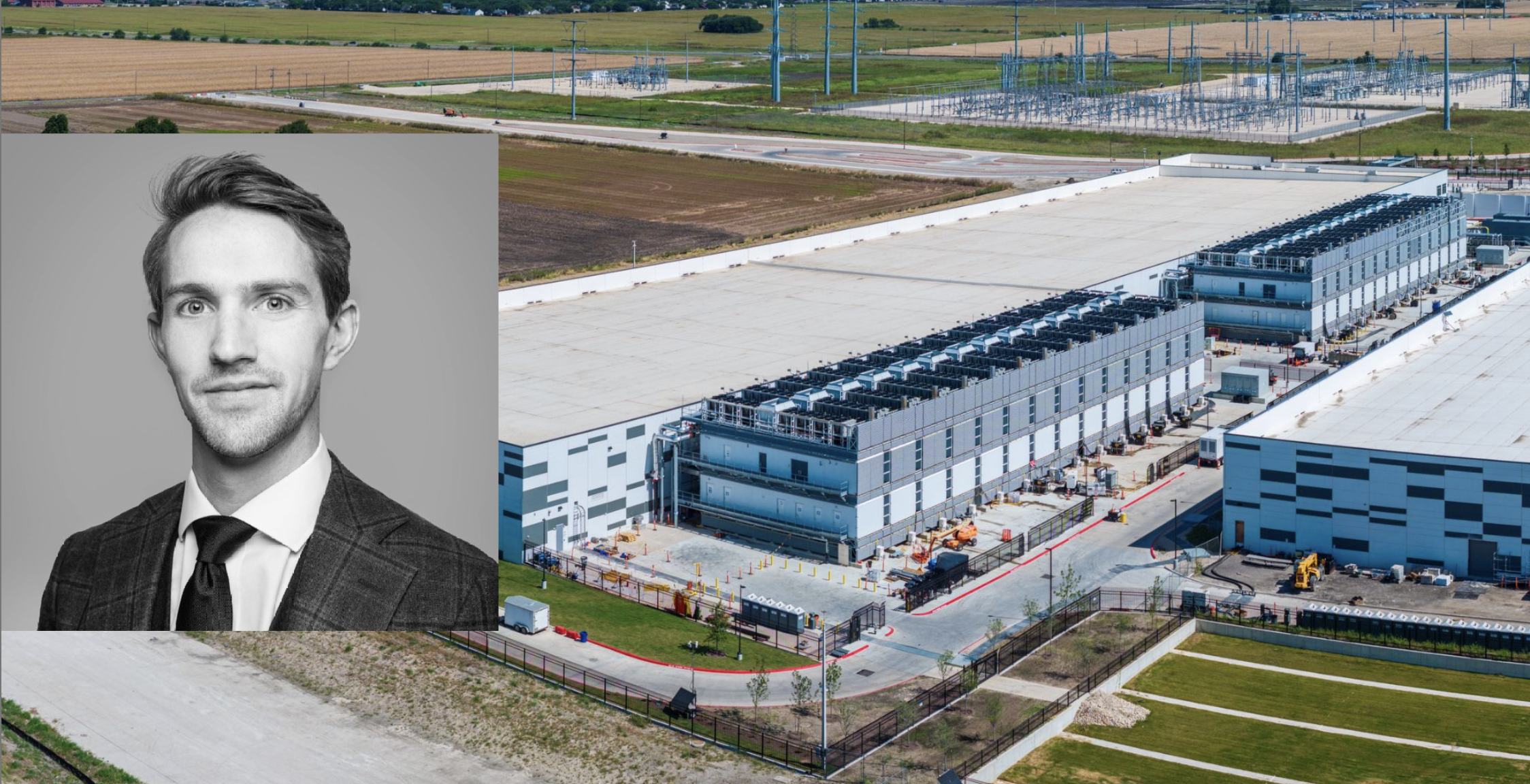
Flexnode wants to get past the usual framing of massive data center campuses swallowing farmland and power grids. The company’s bet is on distributed, “go-anywhere” capacity. These are modular units that can slot into a Kroger parking lot as easily as a hyperscale build site. But as Lindsey lays out below, prefab isn’t a silver bullet. Power remains the hard ceiling on what gets built, and the industry’s biggest problem may not be technical at all. It’s that compute, capital, modular manufacturers, and contractors are still operating in separate lanes, discovering each other’s constraints only after the expensive decisions are already locked in.
Ahead of the panel, Insights by Blueprint caught up with Lindsey to talk about what it actually takes to turn a general contractor into a data center builder and what he’s watching for at Blueprint beyond his own session. Lindsey’s panel — “Building for the AI Boom: Inside the Data Center Construction Supercycle” — will be on September 22 at the Blueprint conference in Las Vegas.
NP: You’ve said the goal is to make every construction company a data center builder. What does that actually take in practice? What’s the skill or technology gap between a general contractor today and one that can stand up a modular data center?
AL: Many general contractors have the core skills and trades. What they need is a standardized system with clear interfaces, testing, and documentation. No one wants to be a contractor’s first project in a new vertical, but it’s the reality we face.
I learned this supporting the development of secure government facilities, where vendors were segregated to their own scope and facility requirements were often first-of-their-kind. The industrialized system made each part independently buildable, verifiable, and integrable on-site with very little rework because labor wasn’t available or cleared. That same model lets contractors slot repeatable deployments between AI factory megaprograms without reinventing the wheel.
Builders do not need to understand AI infrastructure in its entirety to capitalize on this infrastructure gold rush. They need controlled, predictable interfaces and an auditable handoff record.
NP: Flexnode’s thesis has been distributed: “go-anywhere” capacity rather than the hyperscale campus model. As AI compute demand explodes, is the industry actually moving toward more distributed sites, or is gravity still pulling everything toward mega-campuses?
AL: Both are growing because they serve different workloads. Frontier training rewards concentrated mega-campuses. Inference follows users, enterprise data, available power, and jurisdictional requirements. The market is separating into centralized training campuses and distributed, right-sized infrastructure for location-sensitive compute.
NP: Which constraint will have the greatest influence on what actually gets built over the next several years: power, cooling, supply chain, labor, capital, or something else?
AL: Power sets the outer limit. Once power is secured, labor determines delivery.
Hyperscalers and neoclouds have absorbed much of the experienced contractor market, leaving other buyers with long waits or less-experienced teams. The deeper challenge is aligning land, power, equipment, permits, capital, and compute requirements as one process, not separate workstreams.
NP: You’ve talked about public backlash to giant facilities changing sightlines and quality of life. Does the modular, smaller-footprint approach genuinely defuse that opposition, or does it just show up in more neighborhoods at once?
AL: A smaller footprint helps, but every site must still earn local support. Distributed capacity can be matched to available power, phased with demand, and designed around local conditions.
Communities should see credible numbers for water, noise, traffic, grid impact, jobs, and tax revenue before the permit hearing, not afterward.
NP: Where can modular construction and prefabrication meaningfully accelerate data-center delivery, and where are they sometimes oversold?
AL: Prefabrication accelerates repeatable, coordination-heavy work such as electrical rooms, cooling, power distribution, and controls. Factory integration can run alongside site preparation.
Prefab cannot compensate for unresolved trade interfaces, permitting issues, utility work, or civil conditions. Containers work well below one or two megawatts. At 20 megawatts and roughly $200 million, customers should expect configurable infrastructure that can evolve with their compute.
NP: Your Blueprint panel brings together compute, capital, modular infrastructure, and general contracting. Where is the biggest disconnect across that value chain today?
AL: Each party optimizes its own handoff and often meets after critical decisions are made, using different definitions of project success. The result is unowned interfaces, inaccessible or incorrect components, missing or conflicting records and, ultimately, extremely costly delays.
Our team’s experience across complex urban development projects in almost every real estate sector shapes our approach: every project is unique in its own way because of client requirements, jurisdictional regulations, and environmental factors. Managing those variables carefully before and after delivery makes all the difference.
NP: What do you hope Blueprint attendees leave understanding about the data-center construction supercycle that they may not appreciate going into the conversation?
AL: That this is a building problem. Demand may feel unbounded. Land, power, equipment, labor, and community tolerance are not.
The facility must also outlive several generations of hardware, accommodating new density, cooling and suppliers without a bespoke redesign each time.
NP: Other than your panel, what are you most looking forward to at Blueprint this year?
AL: The three most interesting areas to me this year are: (1) Project financing – given Nvidia’s recent announcement with Apollo, Brookfield, Goldman Sachs and others to support the establishment of a GPU financing platform backed by over $500B of combined capital, there should be an interesting dialogue around how that impacts projects; (2) Adaptive reuse and retrofit – how real estate developers and asset managers are looking at older industrial assets through the lens of data center opportunities; (3) Overall data center interest from the market – it looks like we’re at the peak of the hype cycle and I’m keen to see how we are thinking more critically about AI infrastructure, where five years ago most people I spoke to had never heard of a data center let alone seen one.
– Nick Pipitone