

Centralization has been the multifamily industry’s favorite word for the better part of four years. Pull leasing, collections, and renewals into a corporate office, layer in software, and watch the cost savings pile up. It’s a tidy story, and plenty of operators are running it.
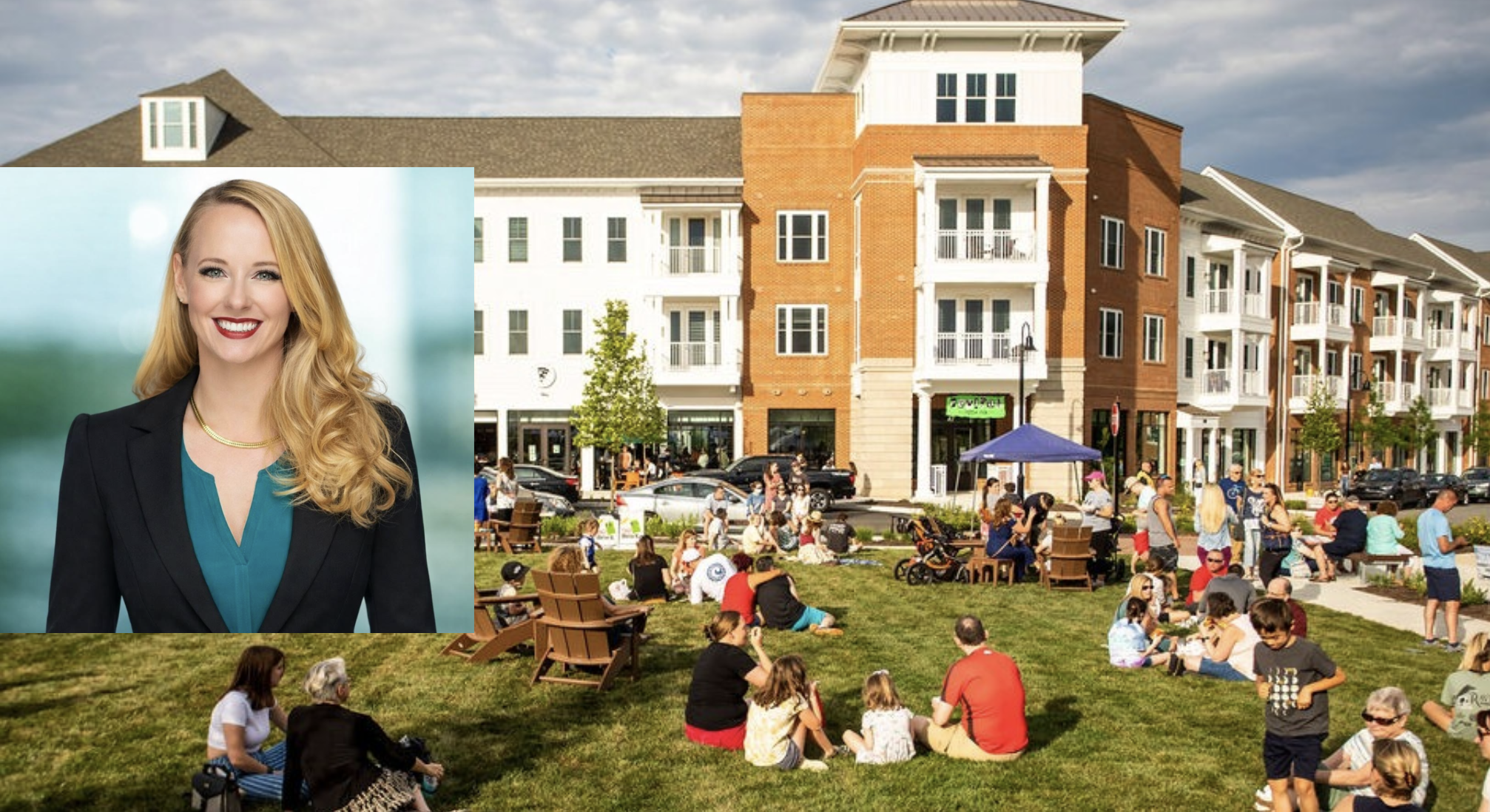
Kelley Brine isn’t entirely convinced. As President of the management arm of Rose Valley, a third-generation, vertically integrated firm with roughly 10,000 units across ten states, she’s spent a career watching trends move from one corner of real estate to another, and she’s learned to ask harder questions about which ones actually hold up. She came up in Manhattan’s conventional luxury market, ran student housing for an international fund, and now leads operations and technology in a technology ecosystem that, in her words, seems to change every single day.
We sat down with Kelley to talk about Rose Valley’s tech stack, where AI fits over the next six months, what student housing teaches conventional multifamily, and the maintenance robots she’s still waiting on. She’ll be on stage at Blueprint this September, alongside hundreds of other operators, founders, and investors shaping where real estate technology goes next. If the conversation below is any indication, it’s worth being in the room.
BH: For people who aren’t familiar with Rose Valley, tell us about the company and its portfolio.
KB: Rose Valley is a multifamily management company, and I’m President of the management arm. We’re vertically integrated, so we also have a capital company. It’s a generational business: it’s been around for 40 years, and this is the third generation. We like to say we’re a family business with institutional capabilities, because it’s still family-run, but we work with institutions as well as high-net-worth individuals as LP partners on our buildings.
We’re primarily owner-managed, but we also do fee management. That started with fee managing for some of our investors and family members, and we’ve since branched out into other fee management, especially in markets where we already have boots on the ground. Today we have about 10,000 units across ten states, split roughly 80% owner-managed and 20% fee-managed.
BH: Tell us about Rose Valley’s technology stack today and the problems you’re looking to solve.
KB: It feels like it changes every day. The days when you could evaluate your tech stack once a year, or even every six months, are long gone. We’re in meetings weekly asking what’s working, what isn’t, and what we need to change. When something like Claude updates every single day, it’s hard to stay ahead of the curve and reevaluate what’s working, because it’s not just about what’s coming out. It’s about how your current stack and vendors are actually performing.
One issue we’ve run into is that a lot of the companies we brought on for a specialized reason, say vendor credentialing or tenant screening, start branching out and doing other things. Everyone starts at one point and then spreads. The problem is that it can dilute the focal point of where they started. The main thing we hired them for sometimes isn’t as good as it was, because they’re investing in all these other avenues to diversify revenue.
Then you get overlap. The company we use for one thing is suddenly also a CRM, and our CRM is also something else. Honestly, I’m just looking for the Microsoft of property management. I’d happily go all-in on a 365 for our industry.
And then there are the non-integrations. Platforms and PMSs that used to integrate stop integrating, because now they offer that feature themselves and don’t want to send you elsewhere. But their version often isn’t as good, so you end up with shadow integrations that don’t really work. Not a fan.
BH: Where are you looking to push on technology right now?
KB: Through the end of last year, we were really focused outside the corporate office, on different avenues for delivering services to our employees and our tenants. It was a more outward focus.
Recently we’ve turned a lot more inward. With the advances in Claude and ChatGPT, these tools change constantly, and they sound less and less like an em dash every other sentence. It’s no longer a question of if we’ll be able to fully integrate AI across the business. It’s when. That means bringing it across the enterprise, training all of our employees rather than everyone using it separately, fully sandboxing it, and building SOPs for how we use AI and where agents can create efficiency. That’s the focus for the next six months: how can all of us do our jobs better, faster, and easier?
BH: How have you approached centralization?
KB: On the purchasing and national accounts side, we are centralizing. We have such a large footprint that we want to use our numbers to our advantage, and being scattered actually makes it easier, because we’d rather work with one vendor than a lot of smaller ones. That gives us more buying power and better deals for our investors. We have contracts with big suppliers like Chadwell Supply and Sherwin-Williams that give us guaranteed pricing, which makes things easier.
On leasing, it’s harder. The piece we centralize is mostly renewals and collections, brought into the corporate office. But I’ve been somewhat anti-centralization, even though it’s been the big buzzword for the past four years. Back at NMHC in January, I had interesting conversations with people who are actually decentralizing again, because there’s a real downside to centralization: it’s the people physically being there and keeping your office open. If you want certain office hours, or you want to mandate that kind of availability, you can only do that with bodies on site. And you want those people to have meaningful work while they’re there.
A lot of leasing, collections, and renewals is still heavily relationship-driven. If someone hasn’t paid rent, I’d rather have a person who knows that resident just lost their job, or was in the hospital, and can be more sensitive about it, instead of a corporate employee working down a list. For reminders, updates, and emails, centralization is great. But Claude and other AI programs are going to be able to take on a lot of those centralized roles, especially the ones that aren’t relationship-driven or high-touch. The opportunity is to have your people focus on the relationship and the interaction, not the paperwork and the reaction.
I’ll give you a related example. Everyone loves touchless, 24-hour self-guided tours, and they are great to offer. But research keeps showing that people still prefer to be walked through a space. So self-guided tours work best as an accommodation for off-hours, not as a replacement for the staffed experience.
BH: Prior to Rose Valley you ran a student housing portfolio. What translates from student housing to conventional multifamily?
KB: A lot, and not just on the tech side. I really noticed it when I came back to conventional after six years in student housing. I’d see something and think, “Oh, we did that two years ago, and it’s just coming out here now?”
There’s a reason for it. You’re dealing with a younger demographic, so adoption is faster, and the buildings are often newer. Purpose-built student housing is completely different from when I was a student. Back then you got the worst, crappiest house nobody else wanted. Now student housing looks like a Class-A luxury building in New York City. It’s changed enormously in just the past few years.
Some things don’t trend over, of course. When my previous company built a building in Champaign, Illinois for [the University of Illinois], we had a game room with Mario Kart and giant Pac-Man, and adult-sized swing sets. That was great, but it’s not coming to one of our conventional buildings. The décor, though, did transfer. I’d watch trends start in student housing and shift over, especially around design and technology.
BH: How about on the technology side?
KB: Touchless, doing everything online, started much more in student housing, because the younger generation didn’t want to pick up the phone. Just text me, just send it to me. The portals had to follow. RealPage and Entrata were big in the student realm and were among the first to put messaging inside the PMS. EliseAI did really well with its bot early on in student housing before it moved over to conventional.
It’s also lifestyle things. Amenity rooms are far more common in conventional multifamily now than they were 20 years ago. Same with events. When I first got into student housing I couldn’t believe how many events they ran. Twenty years ago, conventional buildings didn’t throw events for residents all the time. That was something you got at a timeshare in Florida. Now we run a lot of them.
BH: Is there technology you wish existed that doesn’t?
KB: Robots. A plumbing robot, an electrician robot, a landscaping robot. Just like I’d grab a leaf blower, I’d love to send out a landscaping robot. I’ve seen some, and I keep wondering why the Roomba-style robotic lawnmower hasn’t taken off in multifamily. They’re huge in Europe, everyone has one, and I’m not sure why they haven’t caught on here.
We’ve had a lot of technology come to the on-site office to automate work and make things easier. We need a lot more of it in the physical, maintenance side of the business. Property management is a high-turnover industry overall, on both the office and maintenance sides, and there’s been a labor shortage in maintenance since before COVID. Anything that helps with that would be welcome.
BH: What advice would you give to technology vendors who pitch you?
KB: One thing I loved came from a vendor we’re likely to pilot. They told me they have a 30-day out: you renew every 30 days. That stuck with me, because I’ve been saying for the past six months that I don’t want contracts longer than a year. Everything is changing too quickly, on our end and theirs. A vendor might fall behind, or decide to launch five other business plans and dilute their product. I want the ability to move.
Their reasoning was great: they do 30-day terms because they have to win over your business constantly. They don’t want you to feel stuck with them. They want you to want to stay. That’s how it should be, instead of being locked in for nine more months before you can switch. I’d rather have an ongoing relationship, and that’s really what’s changing between technology vendors and operators. It’s no longer “sign the contract and don’t talk again until renewal.” There’s a continuous relationship now.
The other thing I push vendors on is training. Property management is high-turnover, so it falls heavily on corporate teams and trainers to keep people up to speed on the software. So I ask vendors to step in. Everyone says yes to training. But I ask: will you provide constant training? Every time you roll out something new, will you train on it? If we have turnover, can the new person call you and set up a session? The vendors who do that, I now write it into all of our contracts. I don’t want a set-it-and-forget-it relationship.
It makes sense from their side, too. If we roll something out and it isn’t implemented or used correctly, we won’t renew, even if it’s not really the vendor’s fault. If they have a direct relationship with the people using the product, train them, and follow up, they have a much better chance of keeping us, because the product actually gets used the way it should.
BH: What are you excited about for Blueprint this year?
KB: It’s my first year, and I’m excited to be there. I like that it spans so many different sectors, and I want to see what’s new, because things are changing so fast. You can go to a technology conference every three months and still be amazed.
And I’m hoping to see those robots. A plumber, an electrician, a painter. A painter doesn’t even seem that hard; it’s basically a wall. I know someone who built a company using drones to wash windows, and if you can take the insurance cost out of work like that, it’s a big deal. I just want to see more in that space, the things that make our lives easier.